Did you know that lighting is often one of the biggest energy consumers in large industrial buildings?
That’s right. General commercial/industrial mixed-use buildings record energy consumption of 18-30%, while warehouses record a whopping 65-95%. The problem may lie in how lights are used, not in how many are installed.
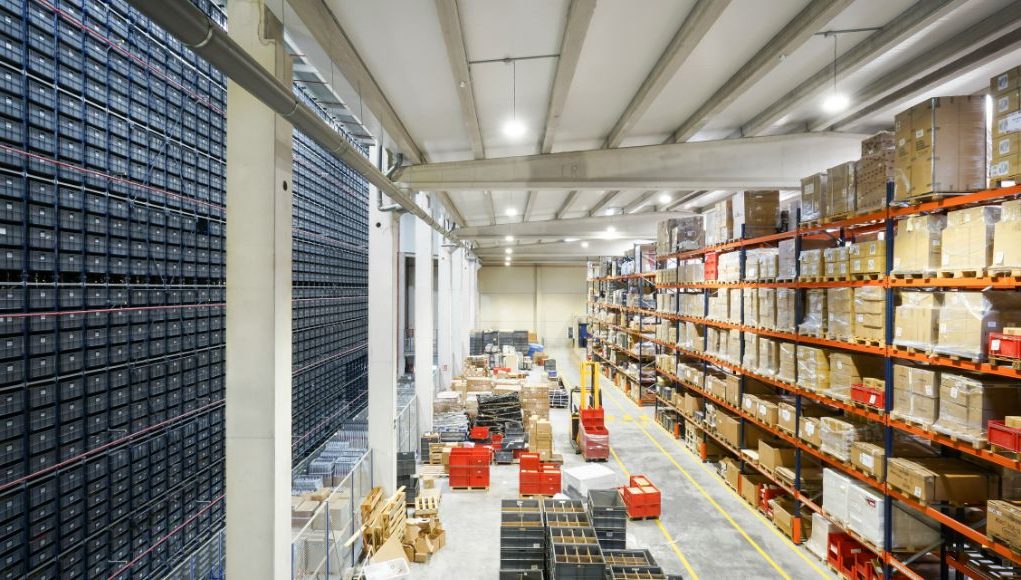
Warehouses, factories, and logistics hubs… many of these spaces are still lit as if every square metre is in constant use. Rows of high bay lights stay on from the first shift to the last, even when whole areas are empty for hours at a time.
This is where motion sensors move from being “cool to have” to a strategic energy tool. When used properly, they help large facilities cut waste and lower operating costs (of lights), without sacrificing compliance and risking disrupting operations.
To understand the value of motion sensor lights, it helps to start with the real issue.
Why Lighting Energy Waste Is a Bigger Problem in Large Facilities
In small buildings, leaving a few lights on overnight is, for lack of a better word, annoying. In large facilities, it’s concerning. The sheer size of industrial spaces means even small inefficiencies are multiplied across thousands of square metres.
In other words, costs can be astronomical.
Warehouses, factories, and distribution centres often run lighting continuously, regardless of actual activity.
- A racking aisle might be used for only a few minutes each hour, yet the lights above it remain at full output all day.
- Loading bays may sit empty between deliveries, but the lighting remains on, “just in case”.
High ceilings make this even more expensive. LED high bay lighting for warehouses is designed to be powerful, able to throw light from six, eight, or even twelve metres above the floor. Pair that with long operating hours that can last 12 to 24 hours a day, and energy use quickly adds up.
Many industrial spaces also have a “leave it on” habit when it comes to lighting. This is usually safety-related, keeping lights on to reduce safety risks. But this habit quietly drains energy budgets year after year.
Motion sensors challenge this by keeping lights on only when they’re needed.
What Are Motion Sensors and How Do They Work in Industrial Settings?
At their core, motion sensors are simple. The sensor detects movement and triggers the lighting to turn on or increase output. When no movement is detected for a set period, the lights dim or switch off.
In industrial settings, these sensors are typically mounted higher than domestic versions, often built into high bay lights and covering larger areas. Although there are models that are installed as standalone controls that manage multiple luminaires.
The main idea is automating decisions and actions that people are not good at making consistently. Instead of guessing whether an area will be used or not, the lighting responds in real time, turning on/off or dimming/brightening.
PIR vs Microwave Sensors Explained Simply
There are two main types of motion sensors used in industrial LED lighting solutions: PIR and microwave.
PIR stands for Passive Infrared. Simply put, these sensors detect changes in heat. When a person or vehicle moves through an area, their body heat contrasts with the background temperature, triggering the sensor.
PIR sensors are reliable, cost-effective, and widely used. The only downside is that they need a clear line of sight. In high bay environments with tall racking or obstructions, their coverage can be limited.
Microwave sensors work differently. They emit a low-power microwave signal and detect changes in the reflected signal caused by movement. This allows them to detect movement through walls, glass, and other materials. It has a wider range, particularly useful in large, open spaces or areas with shelving and equipment that might block PIR sensors.
The trade-off is sensitivity. Microwave sensors can sometimes detect movement outside the intended area if not properly set, leading to false alarms. This makes commissioning and adjustment important in busy industrial sites.
In many large facilities, a combination of both technologies is used, depending on the space and its layout.
Presence Detection vs Absence Detection
Another important distinction between motion sensors is how they control the light.
Presence detection means the lights turn on or brighten automatically when movement is detected, and turn off or dim after a set time when no movement is detected. This is common in warehouses, loading bays, and plant rooms where hands-free operation is important.
Absence detection, on the other hand, needs manual switching on, but the sensor turns the lights off automatically after no movement is detected. People often use this approach when staff want more control of the lighting but still need the automation.
In industrial environments, presence detection is usually preferred in shared or transient areas, while absence detection can work well in workshops or areas with defined tasks.
Where Motion Sensors Deliver the Biggest Energy Savings
Not all parts of an industrial building need motion sensors. Savings from motion sensor lights will still come from proper planning and layout.
Warehouse Aisles and Racking Areas
Keeping lights at full output along every aisle all day is rarely necessary. Forklifts and people move in and out, but no one stays in the aisles most of the time.
With motion sensors, these areas will only light up when there’s activity. Even better is when it’s combined with dimming: the lights can sit at low brightness levels and only run at full brightness when needed. This avoids constant full-output lighting while maintaining visibility and safety.
Loading Bays and Dispatch Zones
Loading bays usually don’t have continuous full-day activity, so the lights here don’t need to be at full brightness all day. Vehicles arrive, staff work intensively for short periods, then the area sits idle.
Motion sensors ensure that lights operate at full capacity only when vehicles and people arrive, then turn off when they’re gone, and the area is empty again.
Safety considerations should be in place here, with appropriate time delays and minimum light levels to prevent lights from switching off suddenly while work is still underway.
Production Areas with Variable Occupancy
Production areas vary by industry. Some run continuously, while others work on shifts. Motion sensors support these changing patterns by reducing lighting when a production line is not in use.
The goal is simple: to avoid lighting empty zones at full power.
Plant Rooms, Storage Areas, and Low-Traffic Zones
These spaces are often forgotten because they are out of sight and only accessed occasionally. When lights are left on unintentionally, it can incur unwanted costs that are easily avoided with motion sensor lights.
Savings from using motion sensors may seem small per area, but in large industrial spaces like warehouses, they can add up to significant amounts each year.

How Much Energy Can Motion Sensors Really Save?
By minimising the number of hours the lights are on, motion sensors can help reduce energy consumption by nearly 30% to 50% (for each fitting). In low-traffic areas like corridors and bathrooms, the potential reduction can even be higher.
Of course, exact savings depend on how the space is used, but the difference between an always-on light and sensor-controlled lighting is significant.
Pair the sensors with LED lighting, and the effect is even better. LEDs already use less energy than traditional lights, so reducing their operating hours compounds that saving. Less time on also means less wear, which can extend the life of the fittings.
Don’t just look at the lights individually when considering ROI (return on investment). Think of the lower energy bills, reduced maintenance, and improved lighting control.
Motion Sensors and Compliance in Industrial Buildings
A common (and valid) concern is whether motion sensors compromise safety or compliance.
Maintaining Safe Light Levels
Industrial spaces must always maintain safe lighting levels. Motion sensors should not plunge areas into complete darkness. Modern systems use background illumination, where lights dim to a safe low level rather than switching off completely.
This ensures visibility for navigation and security while still saving energy.
Supporting Workplace Lighting Standards
In the UK, workplace lighting guidelines are overseen by the Health and Safety Executive (HSE) and standards such as BS EN 12464-1. These standards focus on maintaining adequate light levels for tasks and safety.
Smart control does not mean reduced compliance. Motion sensors are a control method, not a reduction in the overall lighting levels. Specify them correctly, and they support compliance by ensuring the right light is available at the right time.
Common Mistakes When Using Motion Sensors in Large Facilities
Motion sensors are powerful, sure, but only when used correctly.
Incorrect Sensor Placement
Poor sensor placement can lead to range gaps or frequent false triggers. High ceilings, racking, and machinery all affect how sensors detect movement, so always take those into consideration. Don’t just install where convenient; plan the layout!
Poor Sensitivity or Timeout Settings
Sensors that are too sensitive are prone to false triggers. Also, lights that switch off too quickly can be frustrating and even a safety hazard for people moving about. That’s why proper fine-tuning is essential.
Treating Sensors as a One-Size-Fits-All Solution
Like we said, not all parts of the space need motion sensors. Different zones have different needs. Successful projects use zoning and tailored control strategies rather than a blanket approach.
Combining Motion Sensors with LED High Bay Lighting
LED high bay lights are well-suited to motion sensors. A few Simple Lighting units even have microwave sensors built into the fittings themselves.
LEDs handle frequent on-off switching better than traditional lights without reducing their lifespan. LEDs also don’t need time to warm up, so full brightness is instant, and dimming is smooth.
Upgrading to LEDs also future-proofs the facility, making it easier to add further smart controls later.
Is Retrofitting Motion Sensors Worth It in Existing Facilities?
For many sites, yes. Retrofitting motion sensors can make sense even without a full lighting upgrade. The key is assessing how the building is used today, not how it was designed years ago.
Upgrading to LEDs doesn’t need to happen all at once, either. One zone at a time may be more practical, especially since large facilities need more light coverage than small commercial spaces.
How to Plan a Motion Sensor Strategy for Large Industrial Spaces
A good strategy starts with zoning. Identify areas by usage patterns. Don’t rely solely on floor plans, as they don’t necessarily dictate how each area functions. You also don’t need a full upgrade rollout. Do a bit of trial installations until you’re confident.
Working with lighting specialists is also a great start, as they can ensure that the system supports operations, compliance, and long-term savings.
Motion Sensors for Industrial Spaces: Key Takeaways
In large facilities, lighting waste can be costly due to their scale. Motion sensors help avoid this by addressing the number one source of light and energy waste: poor light usage habits.
Motion sensor LED lights reduce costs, support compliance, and improve control when applied thoughtfully. They are not an add-on; they are a practical step towards smarter, more efficient industrial lighting.