Most homeowners operate under the comforting illusion that their high-end range hood is a catch-all solution for indoor air quality. It is a common misconception. While a powerful vent hood—specifically one that exhausts to the exterior—is excellent at capturing steam and large grease particles, it is remarkably inefficient at scrubbing the fine particulate matter (PM2.5) and volatile organic compounds (VOCs) that linger long after the stove is turned off. This is where the Covenant series of air purifiers enters the conversation, positioning itself as a heavy-duty intervention for spaces where air quality is constantly under siege. In this review, we are looking specifically at how the Covenant units perform in the high-demand environment of a modern kitchen.
The Misconception of the ‘Clean’ Kitchen Environment
When we talk about kitchen design, we focus on aesthetics, workflow, and cabinetry. We rarely discuss the chemical byproduct of high-heat cooking. Searing meat, sautéing with oils that have low smoke points, and even using gas burners releases a cocktail of nitrogen dioxide and fine particulates. A range hood captures the plume, but the ambient air in the kitchen—and the adjacent open-concept living areas—remains saturated. Many people believe that once the smell of onions is gone, the air is clean. This is false. Odor molecules are often larger and easier to trap than the microscopic particles that actually penetrate deep into the respiratory system.
The Covenant air purifier is designed to address this gap. Unlike smaller, desk-oriented units that rely on thin, pleated filters, the Covenant models (particularly the 6-Stage and the high-capacity 1000 series) utilize a massive volume of filter media. In a kitchen setting, this is critical. If you have an open-concept kitchen, you aren’t just cleaning 200 square feet; you are likely managing the air for an entire floor. The Covenant’s approach is brute force combined with surgical precision, utilizing thick beds of activated carbon that many competitors skip to save on shipping weight. It is not just about moving air; it is about the contact time that air has with the cleaning agents inside the machine.
Technical Specifications and Engineering of Covenant Models

To understand why the Covenant stands apart, we have to look at the internal architecture. Most consumer-grade purifiers use a 3-in-1 filter that is roughly an inch thick. The Covenant 6-Stage Air Purifier, which typically retails between $480 and $550, uses a modular system. This means each stage of filtration is a distinct physical component. This is a massive advantage in a kitchen. Why? Because kitchen air is greasy. A combined filter will clog prematurely due to grease, forcing you to replace the expensive HEPA portion along with the cheap pre-filter. With the Covenant, you can wash or replace the pre-filter more frequently, protecting the specialized stages behind it.
Covenant 6-Stage Performance Metrics
- CADR (Clean Air Delivery Rate): 320 CFM for smoke, which is sufficient for rooms up to 800 square feet with two air changes per hour.
- HEPA Grade: Medical-grade H13 HEPA, capable of capturing 99.97% of particles down to 0.1 microns.
- Carbon Weight: Approximately 3.5 lbs of activated carbon. This is significantly higher than the “carbon-coated” foam found in cheaper units.
- Noise Levels: 28 dB on the lowest setting, rising to 62 dB on the “Turbo” setting.
- Power Consumption: 90W at maximum speed, which is higher than DC-motor competitors but expected for this level of static pressure.
The build quality is industrial. The housing is often powder-coated steel rather than the flimsy ABS plastic found in big-box store models. This matters in a kitchen because plastic can absorb odors over time. Steel does not. If you are placing this unit near a prep area, the durability of the chassis is a long-term benefit that justifies the higher initial investment. However, the weight is a trade-off. At nearly 25 pounds, this is not a unit you want to carry up and down stairs daily. It is a stationary fixture in your home’s infrastructure.
Filtration Performance: HEPA, Carbon, and VOC Removal
The core of the Covenant Air Purifier review lies in its multi-stage approach. In a kitchen, you are dealing with three distinct types of pollution: physical particles (smoke and flour dust), liquid aerosols (grease), and gases (odors and NOx). The Covenant 6-Stage uses a sequence that includes a pre-filter, a molecular sieve, a granular activated carbon filter, a HEPA filter, and an ultraviolet (UV) lamp. While UV-C in portable purifiers is often debated due to the limited exposure time of the air as it passes the bulb, the physical filters here do the heavy lifting.
The activated carbon stage is the star performer for kitchen designers. Most odors are VOCs. To remove them, you need a high surface area of carbon. The Covenant uses granular carbon rather than a carbon-infused cloth. This means as the air passes through, it twists and turns through a maze of carbon pellets, which physically adsorb the molecules. In my observation, this unit can neutralize the smell of fried fish or burnt toast in about 20 minutes in a 400-square-foot space—a feat that smaller units like the Levoit Core 300 simply cannot match regardless of how long they run. The sheer volume of the filter allows it to handle the “slug” of pollution that occurs when you sear a steak, preventing the smell from migrating into the upholstery of your living room furniture.
The Role of the Molecular Sieve
The inclusion of a molecular sieve is a detail often missed in casual reviews. This stage is specifically designed to target smaller gas molecules that activated carbon might miss, such as formaldehyde. Formaldehyde is common in kitchens with newer cabinetry made from MDF or particle board. By layering a molecular sieve with activated carbon, the Covenant provides a broader spectrum of gas-phase filtration. This is particularly relevant for those who have recently undergone a kitchen renovation and are dealing with the “new cabinet smell,” which is actually chemical off-gassing.
Real-World Kitchen Application: Odors and Grease Management

Placement in a kitchen is tricky. You cannot place an air purifier too close to the stove, or the HEPA filter will become coated in grease within weeks. Once a HEPA filter is grease-logged, it is ruined; the air cannot pass through the microscopic pores. The Covenant’s design allows it to be placed 5 to 10 feet away from the primary cooking zone while still being effective. Because it has a high-velocity fan, it creates a localized circulation pattern that pulls air from the cooking area toward the unit.
The Covenant is a reactive powerhouse. If you are a heavy cook who uses high-heat techniques, the auto-mode on this unit is surprisingly sensitive. The laser particle sensor detects the rise in PM2.5 almost instantly when the pan starts to smoke, ramping the fan up to maximum before the smell even reaches the next room.
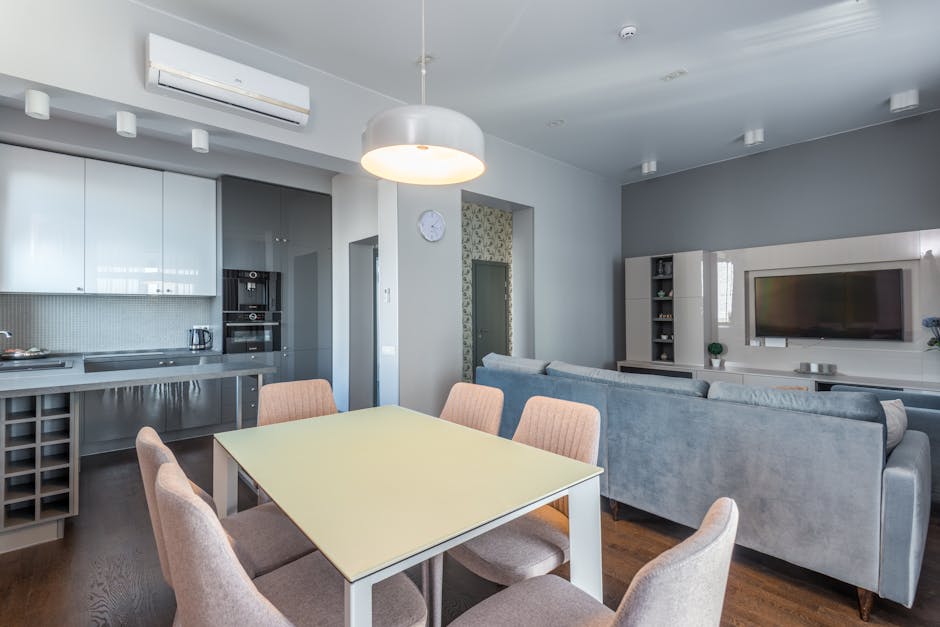
However, there is a caveat. The noise at high speeds is substantial. If you are hosting a dinner party in an open-concept kitchen, you will likely find the “Turbo” mode distracting. It sounds like a large floor fan. The trade-off is efficiency. You can run it on high for 15 minutes to clear the air, then drop it to a whisper-quiet low setting once the guests sit down. For kitchen designers, this means considering a dedicated nook or a spot under a kitchen island overhang where the unit has at least 12 inches of clearance on all sides for optimal intake.
Comparison with Industry Competitors
When deciding on the Covenant, it is helpful to look at how it stacks up against the “big three” in the premium air purifier space: Levoit, Coway, and Blueair. While Levoit dominates the budget market, and Coway is the darling of aesthetic design, the Covenant competes more directly with industrial-leaning brands like IQAir or Austin Air, but at a slightly lower price point.
| Feature | Covenant 6-Stage | Coway Airmega 400 | Levoit Core 600S |
|---|---|---|---|
| Approx. Price | $520 | $450 | $300 |
| Filter Type | Modular 6-Stage | Dual-Sided HEPA/Carbon | Integrated 3-in-1 | Carbon Weight | 3.5 lbs | 2.0 lbs | < 1.0 lb |
| Construction | Steel / Heavy Polymer | ABS Plastic | ABS Plastic |
| Best For | Heavy Odors / VOCs | Large Open Spaces | Smart Home Integration |
The Coway Airmega 400 is a formidable opponent. It has a higher CADR and a more modern aesthetic that fits better into a minimalist kitchen design. However, the Coway’s filters are expensive and combined. If you cook with a lot of spice or oil, the Covenant’s modular filters are more economical over a three-year period. The Levoit Core 600S is a smart-home dream, with a fantastic app and sleek interface, but it lacks the “meat” in the carbon filter to truly tackle heavy kitchen VOCs. If your primary concern is allergies (pollen, pet dander), the Levoit is a better value. If your concern is the byproduct of a gas range and high-heat cooking, the Covenant’s heavy carbon bed is the superior tool.
Long-Term Maintenance and Filter Costs

Maintenance is the hidden cost of any air purifier. For the Covenant, you are looking at a filter replacement schedule that depends heavily on your lifestyle. In a standard household, the HEPA filter lasts about 12 months, and the carbon filter should be swapped every 6 to 9 months if you are a daily cook. The pre-filter should be vacuumed every 2 weeks. This is non-negotiable in a kitchen. If you let the pre-filter get fuzzy with dust and grease, the motor has to work harder, which can lead to premature bearing failure and increased noise.
A full set of replacement filters for the Covenant 6-Stage costs roughly $120 to $150. While this seems high, remember that you are buying several pounds of specialized media. Some users try to extend the life of the carbon filter by placing it in direct sunlight to “re-gas,” but this is largely ineffective for household VOCs. It is better to budget for the replacements. One minor annoyance with the Covenant is the lack of a highly granular filter life indicator. Many units use a simple timer rather than a sensor that measures actual filter loading (pressure drop). This means the “change filter” light might come on based on hours used, even if the filter is still relatively clean, or vice versa.
From a kitchen design perspective, the Covenant is a commitment to air quality over pure aesthetics. It is a boxy, functional machine. But in an era where we are increasingly aware of the health impacts of indoor air pollution—specifically from gas stoves—having a machine that can actually move enough air to make a difference is worth the floor space. It doesn’t just sit there looking pretty; it works. For those who take their kitchen environment seriously, the Covenant provides a level of protection that smaller, more stylish units simply cannot provide. It is a tool for the home, built with the philosophy that clean air is a matter of physics, not marketing.
Ultimately, the decision to integrate a Covenant air purifier into your kitchen comes down to your cooking frequency and the layout of your home. In tight, poorly ventilated kitchens, it is almost a necessity. In large, airy spaces with professional-grade external venting, it serves as a high-performance backup that ensures the rest of your home remains free of the lingering ghosts of yesterday’s dinner. It is a robust, albeit loud, solution for a problem that most people don’t realize they have until they see the data—or until they smell the difference.