What’s the one thing that’s easy to overlook in industrial environments? If lighting didn’t come to mind, then that’s the whole point.
Lighting IS easy to overlook. It sits above your head, quietly doing its job… until it doesn’t. And that’s when you realise that lights are important, and when they fail in a factory, warehouse, or distribution centre, the impact is immediate and expensive.
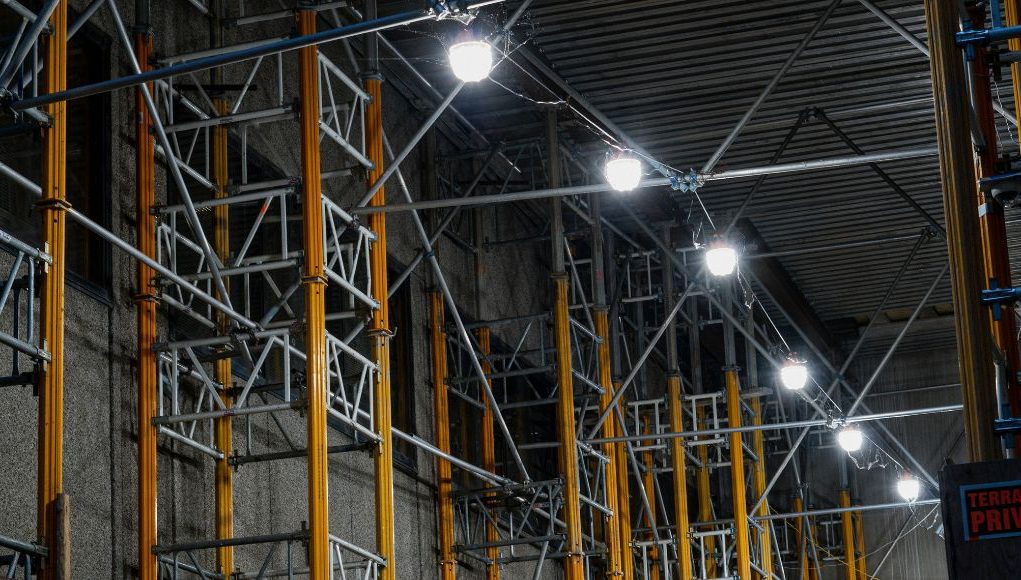
Replacing light fixtures in large facilities can be disruptive. Since they’re way up high, replacement may require special equipment that can block an entire aisle, interfering with the workflow.
That’s why industrial LED lifespan is an important consideration. Good, high-performance lighting keeps people productive, safe, and compliant without constant interruptions.
Why Lighting Downtime Is So Expensive in Industrial Environments
The true cost of the lighting failure is not reflected in the invoice for the light replacement. The real damage happens on the floor.
The first “casualty” when lighting goes down is productivity. Tasks take longer in reduced light, errors become more frequent, and some operations need to stop completely.
- In warehouses, poor visibility slows picking and packing.
- In manufacturing, production lines may need to stop altogether.
- In cold storage or hazardous areas, even a single failed luminaire can trigger a safety shutdown.
These disruptions can dramatically increase labour costs, forcing teams to operate in a reactive mode. Production suffers, and unplanned maintenance eats up the budget.
Lighting failures disrupt operations more than expected because light is connected to everything. It affects speed, accuracy, morale and safety all at once.
In conclusion, reducing lighting downtime is one of the simplest ways to protect operational continuity.
What “LED Lifespan” Really Means in Industrial Use
LEDs are known to have impressive lifespans compared to traditional lights, and in most cases, they’re marketed with this as the primary selling point. But in industrial environments, lifespan is not a fixed promise.
Lights here are influenced by conditions, usage and component quality.
Rated Lifespan vs Real-World Performance
You’ll see terms like L70 or L80 in most LED fittings. This is used to define the useful life of an LED light. An L70 rating means the light output has dropped to 70% of its original level after a certain number of hours, often 50,000 or more.
- What it does not mean: The light suddenly stops working at that point.
- What it does mean: The light is no longer suitable for the task.
A 30% drop in light output is bad news for many industrial settings. It can push areas below the required lux levels, which creates safety and compliance issues.
One thing to note is that advertised hours are based on controlled test conditions, not real-life scenarios. Clean environments and ideal power supply are rarely found in real industrial buildings.
Why Advertised Hours Don’t Guarantee Uptime
Don’t get this wrong. LEDs are still more efficient than traditional lights by a very large margin. What we’re saying is just don’t rely on the numbers too much and consider other factors that can affect longevity and performance.
Factors like the driver, thermal design, and sealing affect an LED’s lifespan. When one of these fails, the whole fitting also fails, regardless of the LED’s rated lifespan.
Why Industrial Conditions Shorten Lighting Life
Industrial spaces can easily become a lighting fixture nightmare. The number one enemy of longevity here is heat. Poor thermal management causes components to age faster, especially drivers.
Dust build-up restricts airflow, trapping heat inside the fitting. Dust that gets into the fitting also dims the light output. Vibration can loosen internal connections over time, leading to intermittent failures that are difficult to diagnose.
Commercial vs Industrial LED
This is where the difference between commercial lighting and industrial-grade LEDs becomes clear.
- Commercial fittings may perform well in offices or retail spaces but struggle in factories or warehouses.
- Industrial-grade luminaires are designed with heavier-duty components, better sealing, and stronger thermal pathways to withstand challenging conditions day after day.
The Key Factors That Determine Industrial LED Longevity
Choosing lighting for long-term reliability should not be limited to brightness and price. Here are more factors to consider:
Driver Quality and Thermal Management
LED drivers are often the first to fail before the LED. They handle power conversion, regulation, and protection. They are also sensitive to heat and electrical stress. Which is why low-quality drivers are not recommended, as they may work but degrade quickly under continuous operation.
Thermal management is crucial in high-bay installations, where heat can rise and linger near the fitting. Which is why high-quality (and well-designed) luminaires use robust heat sinks, airflow channels, and quality materials to draw heat away from critical components.
Without this, even a good driver will struggle to survive.
Environmental Protection (IP Ratings and Build Quality)
Dust, moisture, and washdown processes are common in industrial settings. All of which are not light-fitting-friendly. An appropriate Ingress Protection (IP) rating protects internal components from solid and liquid ingress.
However, IP rating alone is not enough. Build quality matters too.
Poor seals, thin housings or untreated metal parts can lead to corrosion, especially in cold stores, food processing or chemical environments. Once moisture or dust enters the fitting, failure is often only a matter of time.
Operating Patterns and Switching Frequency
Habits, when it comes to light use directly impact lifespan.
- 24/7 operation creates constant thermal stress.
- Shift-based use introduces frequent on-off cycles, which can strain drivers if they are not designed for it.
Poor control strategies make this worse. Lights that switch on and off unnecessarily or run at full output when not needed generate extra heat and wear. Over time, this shortens component life and increases failure rates.
Maintenance Costs: Traditional Lighting vs Industrial LEDs
Industrial LED lighting solutions have long since started replacing traditional lights since their introduction, and for good reasons.
Traditional Lighting
Traditional lighting systems are maintenance-heavy. Lamps frequently fail, especially in high-bay or harsh environments. And constant failure in industrial spaces creates a chain of costs that is hard to ignore when combined for the year.
Lamp changes require access equipment, trained staff and downtime. In many facilities, maintenance shutdowns must be scheduled, which can affect production or logistics.
Industrial LEDs
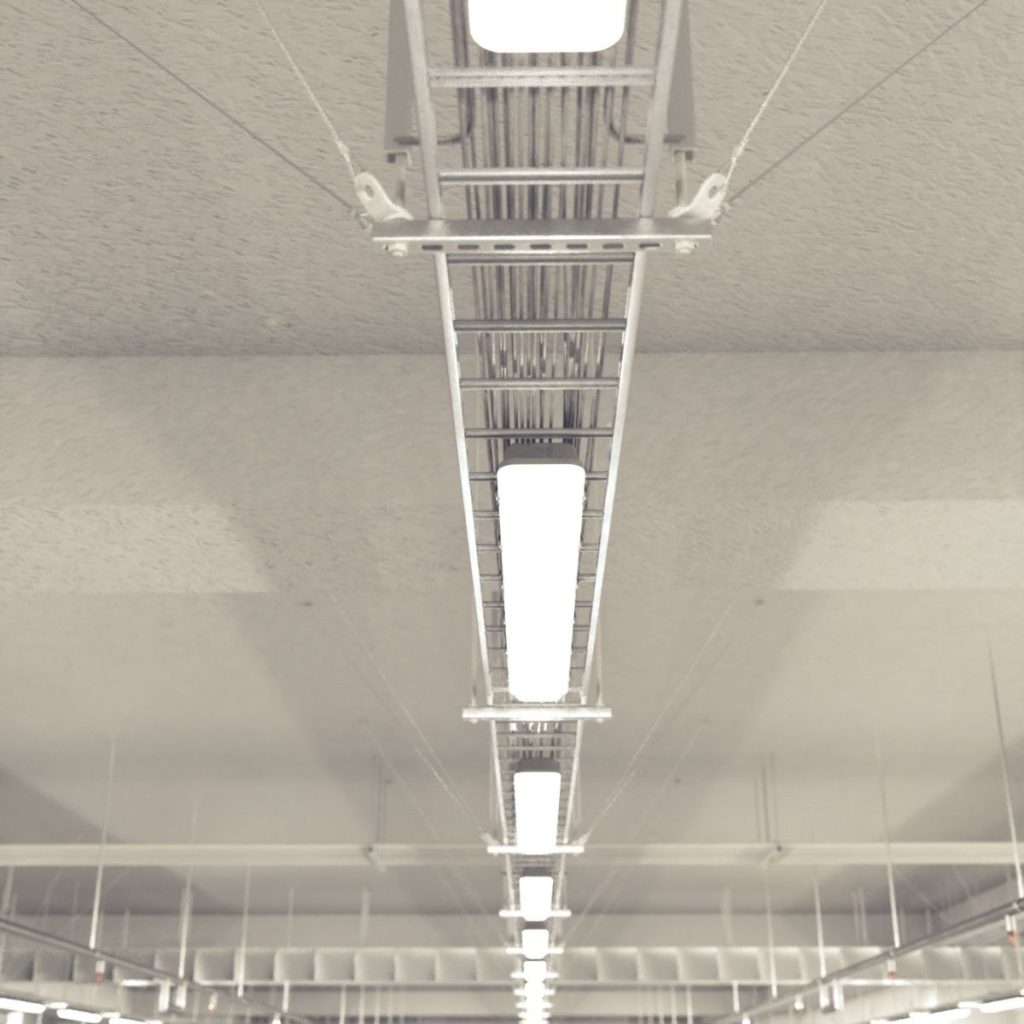
Industrial LED lighting, on the other hand, dramatically reduces maintenance frequency. Longer service intervals mean fewer callouts and shutdowns. This does not mean LEDs are maintenance-free. Instead, they allow for a more planned inspection and optimisation instead of reactive maintenance.
Facilities that move to industrial-grade LEDs often see maintenance budgets fall and operational stability improve.
Preventive Maintenance Strategies for Industrial LED Lighting
“Prevention is better than cure” applies to a lot of things. And yes, even your industrial LED lights. Preventive maintenance helps protect performance and avoid unexpected failures.
Planned Inspections and Cleaning Schedules
Inspections can help you identify signs of wear, such as discolouration, loose fixings, or damaged seals, early on, so you can take appropriate action before something breaks.
Regular cleaning also restores performance and protects internal components, especially since dust and debris reduce light output and trap heat. That’s why maintaining airflow around fittings is especially important in high-bay installations.
Simple actions can extend life and preserve the quality of your light.
Monitoring Light Degradation Over Time
Light output does not fail overnight. Gradual fading happens. Monitoring lux levels allows facilities to identify when performance drops below safe or compliant thresholds.
Planning replacements or upgrades before a failure occurs is a smart, cost-saving move that avoids emergency callouts and unplanned downtime. Look at lighting maintenance not as a recurring problem, but rather as a predictable, controllable process.
How Poor Lighting Maintenance Increases Safety Risks
Poor lighting quality poses safety risks. Reduced visibility increases the risk of slips, trips and collisions. In environments with moving machinery or vehicles, even small drops in light levels can have serious consequences.
This is especially true for emergency lighting. If poorly maintained, degraded fittings may not provide sufficient illumination during a power failure, putting occupants at risk during an emergency. This also breaches regulations, putting compliance at stake.
Many industrial standards require minimum lux levels. Allowing lighting to degrade below these levels exposes businesses to enforcement action, insurance issues and liability in the event of an incident.
Using Controls and Sensors to Extend LED Lifespan
Modern lighting controls and sensors are not just about energy savings. They are powerful tools for extending lifespan. Here’s how:
Motion sensors turn on the light only when someone needs it and automatically turn it off after a set period. This reduces unnecessary run time in low-traffic areas.
Zoning means only a portion of the open-space is lit. This ensures lights operate only where needed. Paired with dimming, light output is lowered during quiet periods, reducing heat and electrical stress.
Note that lower thermal stress means longer component life. Over time, this translates into fewer failures and more stable performance.
Common Mistakes That Shorten Industrial LED Lifespan
Many premature failures result from poor decisions that could have been avoided if you knew what to look out for.
1.Choosing low-cost fixtures with weak drivers. These fittings may meet basic specifications but lack the resilience needed for industrial use. Any savings you get at purchase are quickly lost through downtime and replacements.
2.Ignoring environmental ratings. A fitting that works well in a dry warehouse may fail rapidly in a dusty or wet area. Proper IP rating is critical, especially in demanding industrial environments.
3.Overdriving luminaires to compensate for poor design also causes problems. Pushing a light beyond its limits increases heat and shortens its life.
Each of these mistakes increases downtime risk and maintenance costs.
How to Specify Industrial LED Lighting for Maximum Uptime
Specifying for uptime means matching fixtures to environment and usage, not just to layout.
✅ Consider temperature, dust levels, moisture exposure, and operating hours. Choose luminaires designed for those conditions, with robust drivers and thermal management.
✅ Plan for accessibility. Even long-life fittings will eventually need attention. Designing layouts that allow safe access reduces disruption.
✅ Most importantly, look at the total cost of ownership rather than the upfront price. A slightly higher initial investment often pays for itself many times over through reduced downtime, lower maintenance costs, and longer service life.
Industrial LED Lighting Solutions
Industrial environments demand lighting that works as hard as the people below it. Durable LED solutions designed specifically for industrial use provide consistent performance day after day, without becoming an operational risk.
Here are some long-term lighting strategies you can adopt to protect uptime, safety, and maintenance budgets:
1.Standardise Fixtures Across the Site
Using a consistent range of industrial-grade LED fittings across similar areas simplifies everything, from spare parts and driver replacements to maintenance training. This way, faults are resolved faster, and downtime is reduced.
2.Design for Maintainability, Not Just Installation
Lighting layouts should consider future access from the start. Selecting fittings with easily replaceable drivers, plug-and-play components, and practical mounting heights makes long-term upkeep far less disruptive.
3.Integrating Controls as a Core System Feature
Rather than treating sensors and controls as optional add-ons, successful long-term strategies integrate them from the beginning. Zoning, dimming, and occupancy control reduce unnecessary runtime, lower thermal stress, and extend component life.
Long-term lighting strategies and audits help facilities make informed decisions and avoid costly mistakes.
Key Takeaways: Lighting Reliability as a Cost-Control Strategy
In industrial settings, lifespan equals uptime. The longer the lighting performs at the required level, the fewer interruptions your operation faces.
Proactive planning beats reactive maintenance every time. Proper understanding of how LED lifespan really works can turn lighting into a stable asset rather than a recurring headache.